The Boulevard That Goes Slow
A street-level guide to the city's beat-scene lineage, the Leimert Park through-line, and the geography that shapes the sound.
By NOA
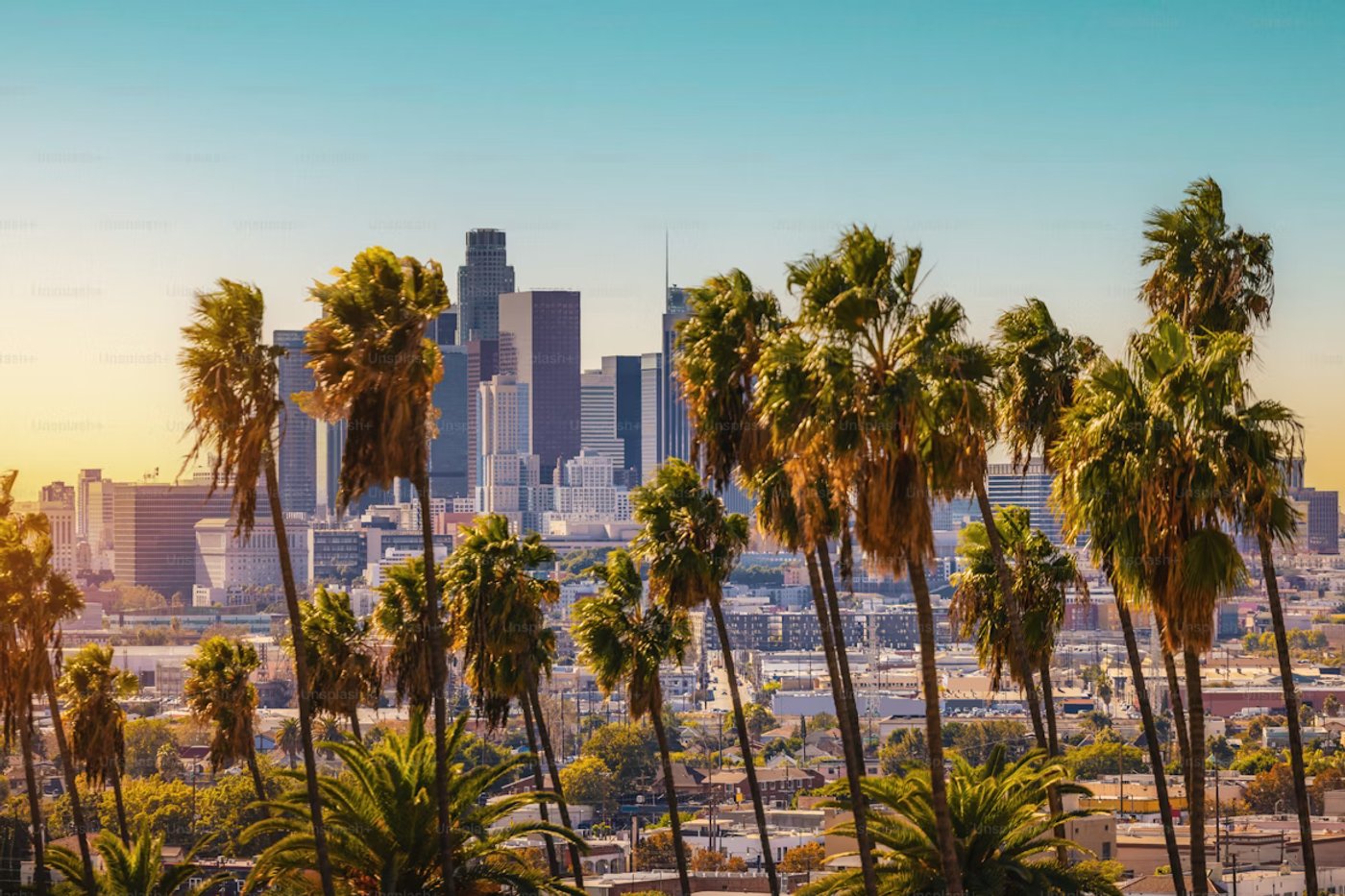
This is the first thing to get right about LA. The shorthand version — "LA beat scene" — is real, and in places below we'll talk about Low End Theory) and Brainfeeder and the canonical lineage. But that lineage is one ecosystem inside a city that has at least three more, sometimes overlapping, often not. The South Central jazz tradition feeding into Project Blowed and the Leimert Park hip-hop infrastructure. The G-funk-and-beyond lineage running from Dr. Dre through DJ Quik into the present. The west-side artist enclaves, the desert-edge programming pull. Each of these has its own rooms, its own producers, its own canon, and the geography of the city often keeps them from meeting on the same dance floor.
This guide is for people who want the whole city, not the festival version.
Low End Theory and the beat scene
The beat scene is the thing about LA that the rest of the world picked up first, and it has one specific origin: Wednesday nights at The Airliner, a small club in Lincoln Heights, starting in 2006.
Low End Theory) was founded by Daddy Kev along with The Gaslamp Killer, Nobody, Nocando, and D-Styles. The format was simple — a weekly Wednesday residency built around instrumental hip-hop, beat-scene producers, and an open invitation to play unreleased material. It ran for eleven years before closing in 2018, and across that decade it functioned as the public-facing rehearsal space for everyone who became canonical: Flying Lotus, Thundercat, Daedelus, Tokimonsta, Samiyam, Ras G (who passed in 2019 and whose archive remains essential), Knxwledge, and the broader Brainfeeder roster.
The label that captured most of this is Brainfeeder, founded by Flying Lotus in 2008 and still running. The catalogue is the fastest way into the sound — the stretched-tempo, jazz-influenced, sample-saturated approach that Dilla's lineage took and remixed through California. The other label that matters is Stones Throw, founded earlier and broader in scope, the home of Madlib, J Rocc, Knxwledge again on a parallel track, and a generation of producers who never quite fit Brainfeeder's psychedelic edge but came up on the same bills.
The Airliner closed because of the building, not the scene. Daddy Kev has continued programming under different formats — pop-up nights, occasional warehouse events, tribute series for Ras G — and the post-Low-End ecosystem still operates. But the canonical Wednesday residency that produced the public version of LA beat culture is over, and the scene has redistributed itself across rooms instead of one anchor.
Leimert Park
The older root is in South Central, at a venue called KAOS Network on Crenshaw Boulevard, where in 1994 a Thursday night open mic called Project Blowed started up.
Project Blowed ran for over two decades and produced a generation of LA hip-hop that was harder, weirder, more lyrically demanding than the West Coast mainstream — Aceyalone, Freestyle Fellowship, Abstract Rude, Busdriver, Myka 9. The aesthetic descended from jazz improvisation as much as from East Coast rap, and the open-mic format demanded actual technical chops in front of a small, knowing audience. The phrase "you couldn't be wack" got attached to Blowed early and stuck because it was true.
Leimert Park is also the cultural anchor for the contemporary jazz lineage that fed back into the beat scene through specific bridges. Kamasi Washington grew up in the area; Terrace Martin and Robert Glasper cycle through it as collaborators; Brandon Coleman and the broader West Coast Get Down collective use it as a programming home. The connective tissue between Blowed-era hip-hop and the Brainfeeder-era beat scene runs through these musicians — Thundercat plays jazz with Washington and produces beats with Flying Lotus, and that isn't a crossover, it's the same scene at different bills.
What Leimert Park has held onto longer than most LA neighborhoods is the through-line. The same block carries an open mic from 1994, a contemporary jazz program, a record store, and a constellation of independent venues that haven't been priced out the way Echo Park or Highland Park have. KAOS Network is still active. The Hot and Cool Cafe still hosts. The neighborhood remains the densest concentration of working musicians in LA outside the studio system.
The geography problem
LA's underground operates across distances that Brooklyn or Berlin would consider absurd. The east-side cluster — Echo Park, Highland Park, Lincoln Heights, Frogtown — is twenty-five minutes from Leimert Park on a clear evening, longer in traffic. The west-side enclaves in Venice and Mar Vista add another forty minutes. The desert pull — Pappy and Harriet's in Pioneertown, the Joshua Tree house parties, the Coachella-adjacent programming — is two hours each way, and people make that drive regularly.
This geography fragments the scene into ecosystems that don't always intersect. A producer who plays Resident in DTLA on Saturday and Pappy's in Pioneertown on Sunday is doing two different gigs for two different audiences in two different cultural registers. A Leimert Park crowd and an Echo Park crowd might overlap by ten percent on a given night.
What the city has instead of a single dance floor is a network of overlapping circuits — and the people who matter, the producers and DJs and writers who hold the city's actual map in their heads, are the ones who travel across them.
The car as listening room
LA's most-listened-to room is the car.
This is true in a way that has shaped the music. G-funk's whole engineering — Dre, Snoop, DJ Quik, Warren G — was built around how a track sounds on a car stereo at thirty miles per hour. Sub-bass lows tuned for a sealed cabin. Vocals mixed for moderate ambient noise. Mid-range that survives an open window. The technique didn't go away when G-funk's commercial peak passed; it got absorbed into the whole LA producer instinct. Working LA musicians still test their mixes in cars before they trust them.
This is also why Drive's soundtrack felt so distinctly LA, why Nicolas Winding Refn's decision to lean on Cliff Martinez and Kavinsky read as a love letter to the city's actual listening conditions. The freeway as venue. The cabin as concert hall. Driving home at two in the morning with a record you've never heard before, and that drive being the room where you decide whether the record is real or not. LA musicians know this. The records they make are tuned for it.
The current rooms
LA's current programming spine sits across five anchor rooms and a constellation of warehouses.
Zebulon in Frogtown is the experimental anchor — jazz-leaning, beat-scene-friendly, programmed by people who came up through the Low End Theory ecosystem. Lodge Room in Highland Park is the medium-room indie venue with strong electronic and jazz programming. Resident downtown is the canonical DTLA underground spot, smaller and more flexible than the legacy clubs, with strong booking across hip-hop, electronic, and jazz. 1720 in Boyle Heights is the warehouse — converted industrial space, late nights, harder programming. Catch One in mid-city carries the legacy of Jewel's Catch One, the city's longest-running queer dance space, and now operates with broader programming that includes house, techno, and hip-hop nights.
Outside the city proper, the desert programming has its own gravity. Pappy and Harriet's in Pioneertown books national headliners on a regular basis at a pace that feels surreal for a venue that's two hours from anywhere. The Joshua Tree house parties — semi-private, often word-of-mouth — happen all summer, and the producers who play them are often the same ones playing Zebulon the previous Friday.
What's missing from this list is a Berlin-style canonical mega-club. LA doesn't have one. What it has is a distributed circuit, and that's a feature of the geography more than a bug.
What LA sounds like right now (April 2026)
The beat scene is in maturity. Flying Lotus, Thundercat, and the original Brainfeeder cohort are operating at career-peak with international touring schedules and deep collaborative networks. The contemporary jazz crossover — Kamasi Washington, Robert Glasper, Terrace Martin, Brandon Coleman — has reached the point where calling it "crossover" feels reductive. It's the music. The newer generation — Mndsgn, Knxwledge, Pink Siifu during his LA period, Devonté Hynes when he's in town — operates inside a more genre-fluid frame than Low End Theory's original beat-centric thesis.
The tension worth naming is between commercial polish and underground specificity. LA produces music for the rest of the world's pop charts at industrial scale, and the underground exists alongside that machinery, sometimes feeding it, sometimes resisting it, never fully separable. Ras G's death in 2019 was a generational marker — the first major loss inside the post-Low-End-Theory cohort, and the moment when "the LA beat scene" became something people had to actively keep alive rather than something they were inside.
What you can still feel in 2026 is the specific LA combination — the warmth of a Stones Throw record, the cosmic-jazz expansiveness of a Brainfeeder release, the Project Blowed lyrical density carried into newer artists, the G-funk sub-bass instinct that still shapes what gets considered an acceptable mix. Those four currents braid together in ways that most cities can't replicate, and the city that produces them all simultaneously is doing something nowhere else does.
The neighborhoods
Echo Park and Silver Lake are the canonical east-side underground anchors — the gentrification frontier from a decade ago, now a more settled creative-class zone, still hosting smaller venues and the bars that function as informal listening rooms. Highland Park has become the next-frontier version of the same arc, with Lodge Room as its programming centre. Lincoln Heights and Frogtown carry the legacy of the Low End Theory era at The Airliner and the contemporary programming at Zebulon — gritty industrial-fringe neighborhoods that the music scene found before the developers did.
Leimert Park, in the south, holds the older lineage and the through-line — KAOS Network, the jazz programming, the Project Blowed canon. The neighborhood operates at a different pace than the east-side circuits and produces music that doesn't always travel through the same channels.
Boyle Heights is the warehouse circuit — 1720 as the anchor, plus a rotating set of smaller industrial spaces that program one-offs. Venice carries the legacy artist enclaves, the older heads who've been operating in town for decades and still book occasional shows. The west side overall is more diffuse — Mar Vista, Culver City's gentrifying edge, the Westwood-and-Santa-Monica student programming — but it's the side of town the underground tends not to centre.
Los Angeles, as NOA Sees It
NOA is built around six cities. LA was always going to be one of them.
The Los Angeles Crew crewneck is sun-bleached white with a tonal city-code embroidery — the colorway tuned to a specific kind of late-afternoon LA light, the one that happens around five in the summer when the smog turns the sky amber. The Achilles (LA) pant has WEST / COAST printed tonally on the lower leg panels — near-readable from across a room, fully readable only up close, the way the city's actual underground reveals itself only to people who already know where to look. The 140 (Sun-Bleached) cap is corduroy, with thread color tuned to the bleached-out asphalt of an Echo Park sidewalk in August.
These aren't products. They're a way of saying — to the people who already know — that you know too. That's the whole brand.
No performance. No gatekeeping. No hype. No assholes.
Next: Lagos. The city exports a generation of music every year. The world is finally catching up.
Cited:
- Brainfeeder — label catalogue from 2008 onward; Flying Lotus, Thundercat, Daedelus, Tokimonsta, Samiyam, Ras G, Knxwledge
- Stones Throw — label catalogue; Madlib, J Rocc, Knxwledge, Mndsgn
- Low End Theory) — Wednesday-night residency at The Airliner, 2006–2018
- Project Blowed — Thursday-night open mic at KAOS Network, 1994–present
- KAOS Network — Crenshaw Boulevard cultural anchor
- Bandcamp artist catalogues — Flying Lotus, Thundercat, Daedelus, Tokimonsta, Samiyam, Ras G, Knxwledge, Madlib, Mndsgn, Pink Siifu, Aceyalone, Freestyle Fellowship, Busdriver, Brandon Coleman, Terrace Martin, The Gaslamp Killer, Kavinsky
- Kamasi Washington — official site, contemporary jazz lineage
- Robert Glasper — official site, jazz-and-beyond catalogue
- Cliff Martinez — film-soundtrack work, including Drive
- Venues — Zebulon, Lodge Room, Resident DTLA, 1720, Catch One, Pappy and Harriet's
- Wikipedia background — Dr. Dre, DJ Quik, Snoop Dogg, Devonté Hynes, Nicolas Winding Refn, The Airliner