The Bass That Built A City
Bristol doesn’t have a music industry. It has a sound system. A street-level guide to the city’s bass lineage, from St Paul’s Carnival and the Wild Bunch to dubstep’s second life and the current basement economy.
By NOA
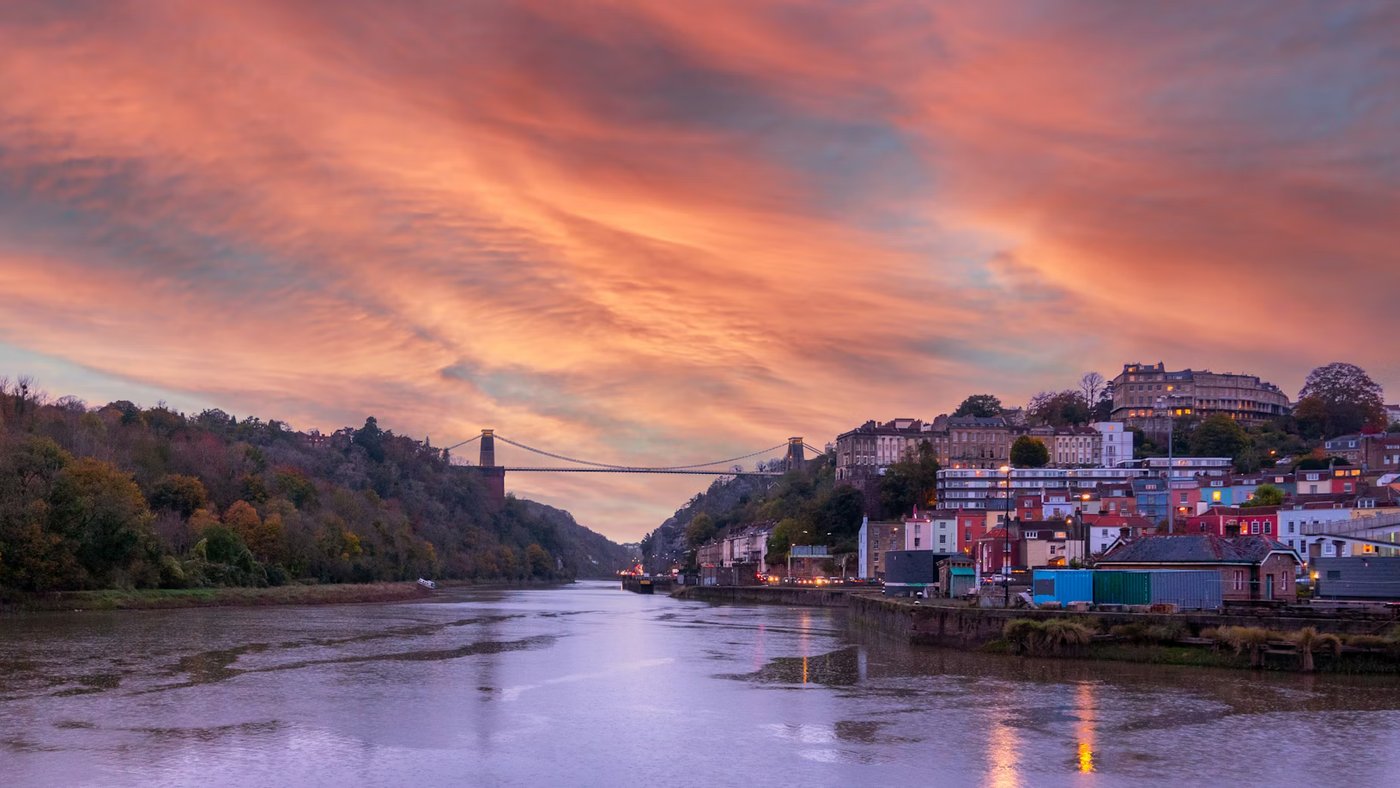
St Paul's and the Wild Bunch
If you want to understand why Bristol sounds the way it does, start at St Paul's Carnival. St Paul's is the Caribbean heart of the city, the neighbourhood that held Bristol's sound system culture through the 70s and 80s, when the first wave of Jamaican and St Kitts families built the clash-and-party circuit that every Bristol artist of consequence came up inside.
By the mid-80s a loose collective called the Wild Bunch were running parties out of St Paul's and the Dug Out club — a rotating crew of DJs, MCs, and producers that included 3D (Robert Del Naja), Daddy G (Grant Marshall), Mushroom (Andrew Vowles), Nellee Hooper, and Tricky at various points. The Wild Bunch was a lineage more than a band. When it splintered, Nellee Hooper went to London and rewired British pop through Soul II Soul and production work for Björk and Madonna. 3D, Daddy G, and Mushroom stayed in Bristol, kept the name briefly, and became Massive Attack. Tricky eventually went solo. Portishead — Geoff Barrow, Beth Gibbons, Adrian Utley — came up adjacent, working out of Coach House Studios just outside the city.
What the world started calling "trip-hop" in the 90s was the ambient byproduct of a generation of sound-system kids learning to make records. Slow tempos, heavy low end, dub-inflected space, vocal registers that owed more to Jamaican MCs and lovers rock than to any contemporary UK pop tradition. The label described the symptom rather than the source, and Bristol mostly ignored it.
Stokes Croft and the Basement Economy
Walk up from the centre to Stokes Croft and you're walking through the city's permanent underground real estate. The corridor runs north out of the old city — part working street, part graffiti gallery, part permanent protest zone. The walls are a rotating outdoor museum of Bristol street art; Banksy came out of the adjacent scene and a dozen painters of equal local importance never went global. Ground floors hold vegan cafés, community radio stations, record shops, and the entrances to basements that have been running parties for a very long time.
Lakota at the top of the Croft is the long-running anchor — three floors, no pretence, bass music for people who want bass music. The Jam Jar (Bedminster but culturally Croft-adjacent), The Old England, and Strange Brew are where the current generation works. Basement stages with proper rigs, low ceilings, and the specific physical sensation of walking downstairs and feeling the sub-bass before you hear it.
The Croft is also where the politics lives. Bristol threw a slave-trader's statue in the harbour in 2020 and the culture around that act has roots going back to the anti-Poll Tax era and further. That political continuity is audible. The underground here has always been the underground because the city has always had something to argue with.
Jungle, Drum & Bass, and the Bristol Chapter
When jungle emerged from London's rave scene in the early 90s, Bristol didn't follow it. The city forked it.
Roni Size and DJ Krust, working with MC Dynamite, Suv, and Die as the Full Cycle / Reprazent collective, built a Bristol version of drum & bass that kept the sound-system DNA intact. Where London jungle pushed for speed and density, Bristol d&b breathed — jazz inflections, dub space, vocals that could hold a room. New Forms won the Mercury Prize in 1997, and the record's texture (halftime breaks, live bass, acoustic instruments cut into jungle breaks) sounded like Bristol because it was Bristol.
The Full Cycle lineage ran through the early 2000s and seeded the neurofunk and liquid d&b branches that now fill basements from Berlin to Tokyo. The current Bristol d&b scene is less centralised than the Reprazent era but the DNA holds: musicality first, pressure second, rave third.
Dubstep, Reshaped
Dubstep was invented in South London. Bristol re-engineered it.
By the mid-2000s a second wave of producers operating out of the city — Pinch (Rob Ellis) running Tectonic Recordings, Appleblim and Shackleton on Skull Disco, the crew around Peverelist and the Livity Sound label — pulled the genre back towards its dub roots and away from the American EDM-adjacent direction that "brostep" would eventually take. Slower, sparser, deeper, more patient. More sound system. More St Paul's.
Livity Sound became one of the most consistent underground labels in UK bass music through the 2010s. Kahn & Neek, Ishan Sound, Hodge, Batu — the label and its orbit have held a specific corner of the bass spectrum for more than a decade, and the Crofters Rights / Strange Brew / Cosies circuit is where that music still plays out on the right rig.
If you want to hear where dubstep went that wasn't the American festival version, you listen to Bristol.
The Current Room
The contemporary Bristol underground is less about genre than about posture. On any given weekend the city is running club nights that move between garage, UK funky, bassline, jersey club, 140-bpm deconstructed stuff, broken beat, and the long tail of dubstep and drum & bass that never went anywhere. The common thread is the rig and the crowd. People who grew up with sound systems and expect the low end to be non-negotiable. Crews who know that a night without MC culture and without a physical room is not a night.
The current generation works through Young Echo (the collective that's been quietly producing some of the most committed UK bass music of the last decade), Lorenzo BITW, Giant Swan on the noise-techno end, and the Noods Radio crew broadcasting out of a unit and running club nights as the current Bristol equivalent of the old pirate station model. What they share with the Wild Bunch is proximity to the sound system. Same lineage, different decade.
Vocabulary
A few things to know if you're going to be in the city.
Trip-hop is not a word Bristolians reach for. Records came out of the sound-system lineage; the label came later, from outside, and mostly described the tempo. Nobody objects to it now, but nobody uses it first either.
The Croft is Stokes Croft. Locals shorten it. It refers to a place and a concept.
The harbour is the centre, literally and emotionally. The city is built around it; the underground kept finding its rooms near the water because the warehouses were near the water.
Bass music isn't one genre, it's a coalition. Jungle, dubstep, garage, bassline, grime-adjacent stuff, the slower 140 and the faster 170 — in Bristol it all plays in the same rooms for the same crowds.
Sound system is a literal rig with literal people running it. Worth saying because elsewhere the term has drifted.
Why NOA
NOA is built around six cities. Bristol was always going to be one of them.
If you know where the sound came from, you know where you're standing. If you know where you're standing, you already know the difference between bass music and bass music for sale. The Bristol Crew carries that observation; the Achilles (BS) pant has SUB / BASS printed tonally on the lower leg panels; the 140 (Bristol) cap is corduroy.
A Bristol-coded capsule drops 29 June. If you want first access, the list is here.
Part of an ongoing series on the cities NOA lives in. Previously: Brooklyn. Next: Lisbon. Coming: LA, Lagos.
Cited:
- Resident Advisor — UK jungle origins coverage
- BBC News — Edward Colston statue, 2020
- Massive Attack
- Portishead
- Tricky — discography on Bandcamp
- Reprazent — New Forms (Talkin' Loud, 1997, Mercury Prize 1997)
- Livity Sound — Peverelist's Bristol bass label
- Tectonic Recordings — Pinch's label
- Skull Disco — Appleblim and Shackleton's label
- Young Echo — collective
- Noods Radio — current Bristol broadcast and club arm
- Lakota, Strange Brew, The Jam Jar — current venues